
Become a member & keep reading for free, or choose a paid membership.
Access all our content & email newsletter
Sipping thick coffee out of a paper cup in a fluorescent-light, beige room, I was a few questions deep into the conversation. We were standing in a basement at a morning networking event in my small town.
“So…are you a founder of the company?” I asked. They sheepishly nodded, “Well, yes, I am.” It was a much different encounter than I usually experience after meeting hundreds of founders across Michigan. Usually, the first words you hear are their title, what they were building, and perhaps, what intros they need. She was building. And flying below the radar.
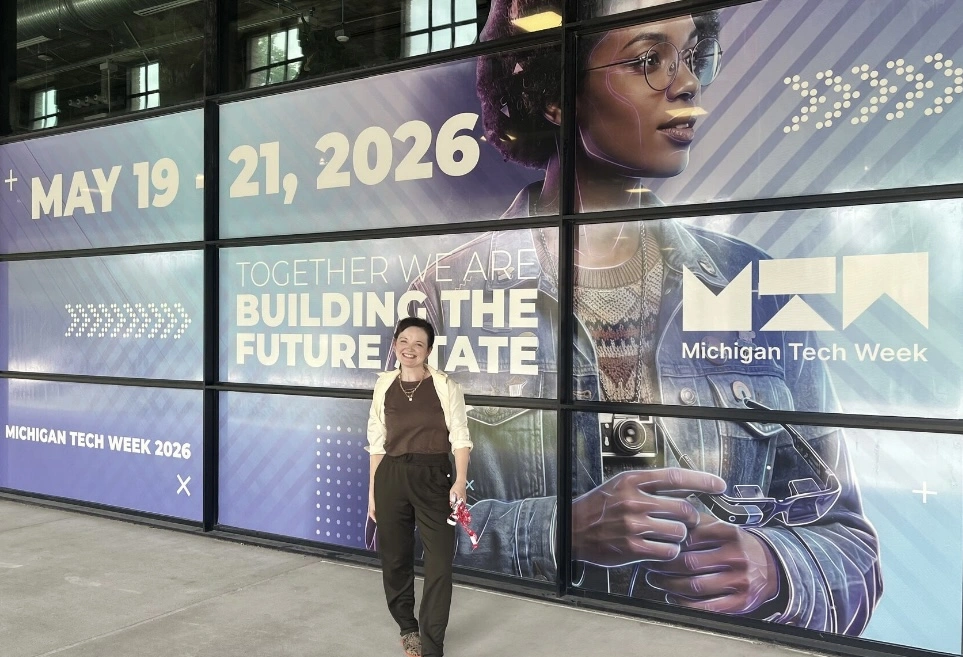
This reminded me of the event I co-led a few weeks ago, the Women Innovators Lounge at Michigan Tech Week. The first floor room at Newlab was packed with over one hundred leaders and innovators, balancing plates of fruit and mini croissants, as they talked shop and built partnerships in real time. Ana Timoficiuc, founder of MinaRosa Technologies, and Karissma Yve, founder of Gildform, led a collaborative conversation from the stage, sharing elements of their journeys with opportunities for the crowd to respond with their own advice and questions.
What struck me at the time was the intergenerational elements of the conversation. The women who spoke up from the audience shared with the conviction that comes through hard-won, lived experience over time. In response to a founder sharing a harrowing moment with an investor, a woman from the audience responded with her experience of learning to filter out even those who say “yes” to you. And later, a more experienced audience member asked the speakers if they could give advice to the younger women in the room about why they should stay on the founder path, after seeing many young women opt out prematurely. Another spoke to her challenges in finding fellow founder female peers, which was met with advice from others about where to look.
It became an intergenerational conversation, which I didn’t anticipate. And as I was leaving the room, someone asked about resources available for more rural founders in Michigan. Another asked about a parent-specific group. A female-only space, intergenerational dialogue, questions about rural founders or parents who may not be in the room…There was something to this. There was a sense of who was in the space, but also who was not there.
After the event, I reflected on what value this type of space brings to an ecosystem like Michigan. I valued what my colleague Delaney Keating, founder, former Colorado ecosystem builder, and current Michigan Founders Fund Operations Director, said about what people expect the founder profile to be:
Intergenerational, cross-cultural, interracial perspectives are all part of the same impulse: the willingness to step into intersections that challenge what we think we know and expand what's possible. Breaking down bias in startup work isn't optional - ecosystems and VCs miss extraordinary opportunities every day because of it. One data point worth sitting with: the average founder in the US is 45. And yet so much of how we pattern-match "founder" skews young. We can miss remarkable people and ideas simply because they don't look, talk, or perform the way we expect. That's not a small thing. It's something worth staying awake to.
I think the Women Innovators Lounge was a microcosm of what else might be possible.
This seemed to be captured by a few of the founders who were in the room that day. Jordan Craven, co-founder of Sizeologic, said, “It’s so fun to see a space like this open up where there doesn’t have to be posturing, just openness and learning.” This openness and learning was reflected in the advice from Sierra Lambert, founder of Gig-L as she prepares to launch the company’s pilot connecting businesses with gig workers: “Our experiences are unique but also very similar. In spaces like these, we can feel not only empowered but also validated in them, which can allow us to keep going.” And Jessica Black, founder of Berry Clean Brands, Inc. adds to this that: “Female founders have mountain-like challenges that they are expected to overcome with little to no resources, [but]...women are equipped to build, empower, execute and steward power responsibly.” To me, each of these speak to being less performative and more grounded in one’s actual experience, which catalyzes collective momentum.
When I asked Keating whether these types of spaces add value or reinforce the gaps, she said, “The honest answer is both. And I think that's exactly why so many of us feel torn. These spaces can sometimes isolate the conversations that most need to be happening more broadly. And yet, women genuinely need space to have discussions we don't always feel free to have in our everyday environments. That tension is real, and I don't think we have to resolve it to find value in showing up.”
This, I think, is a key takeaway for any of us working to build our ecosystems. When we walk into rooms, what are the rooms designed to produce? What and who is at the center, and who remains on the edges? Lonna Hardin, founder of VoiceBlocks, said of spaces like this, “It's a vibe that's more than transactional, it's intentional. That matters. It means that not only are we looking to build high-growth profitable companies, but also resilient founders and startups.” And as Margarita Barry, founder of ShopHand, said, “I don't think women-only spaces are about excluding anyone…The startup world is stronger when more voices, perspectives, and experiences have a seat at the table.”
Gulping down my paper-cup coffee, it took a few rounds of curious questions to discover I was actually talking with someone who had moved to the Midwest and is actively and quietly building a cool company. There’s more talent, more ideas, more creativity, more vision present in our ecosystems than any of us realize. I’ve recently been reminded that so much of whether I experience this creativity firsthand is determined by whether I’m willing to stay curious and be proven wrong. The next best founders, artists, leaders, and innovators in Michigan and the Midwest might not fit the profile anyone expects. The question is whether we’ll notice when they walk in the room.
Aria Spears leads cross-functional projects in Michigan’s startup ecosystem at Michigan Founders Fund. She’s worked in community-building organizations for ten years, is a Duke grad student studying community innovation, and previously lived in Fayetteville, NC.
Read more on this topic
Latest Videos
All Rights Reserved
Copyright 2026 Zeroto7 LLC
Powered by: