.png)
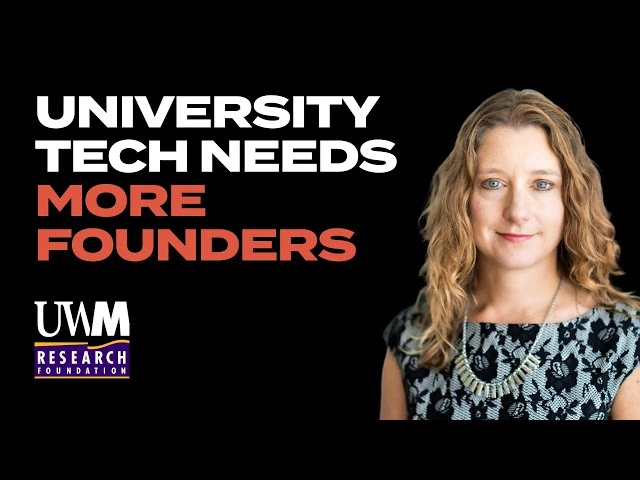
"I think it really helps people understand what startup life is like," says Erin Wall, warming to the topic over Zoom. "If you are willing to do a sport where you're by yourself and you're throwing yourself in the air and falling on the ground injuring yourself… then you might like being a startup founder." She's talking about growing up in St. Louis, Missouri, where she was a 'really competitive figure skater.' The 'really' is hers, and I’m unable to discern whether she’s referring to the level or her attitude towards her chosen sport.
Lunr Capital is a finance platform focused on what it calls 'the next generation of consumer brands,' and in Wall's explanation, this primarily means those selling to farmers markets, small-scale retail and often using a direct-to-consumer (D2C) model when they launch. According to Wall, the company has deployed north of $100 million in capital with $500 million in retail sales across the US-alone. It has done this with more than 300 suppliers globally across dozens of categories, helping them land national retailers including Target, Walmart, Costco and more. All of which makes a lot of sense when you consider Wall's background: she spent almost a decade at Target, latterly as a senior buyer with the Minnesota retail giant, followed by another five years in senior sales and business development roles advising retail and consumer brands.
Lunr was created by the founders of Newbound Venture Capital originally to fill the funding space where equity venture capital did not serve. “The conversation five years ago was… everyone was obsessed with equity and they thought that equity was the only path forward for any business,” she says. “That's why we became really close with the consumer equity eco-system, because they really see the value of what Lunr offers and see it as a way to grow their equity investments.” She became Partner and Chief Revenue Officer, and is now its President.
All that said, my overriding sense when talking to her is that she has been on the path to entrepreneurship from a very young age.
Founders are Born, Not Made
She credits her father with the skillset and drive that set her up for success, as well as the mindset that kept her on the corporate path for so long. As she approached the end of her degree at DePaul University in Chicago, her father told her she should aim to have a job offer lined up before she graduated. "There was no 'go travel the world and feel yourself out,'" she says. “He was like 'the bills will start coming the day you graduate and you need to be able to pay them.'”
Her father had a solid history in this area.
He was the CFO of Milnot, a company that produced sweetened and condensed milk and ChilliMan Chilli, and she says her childhood was partially spent trailing him around grocery stores in a kind of unofficial apprenticeship in retail merchandising. "We would spend a lot of time in the grocery store analyzing shelf placement, figuring out if the price point was right, rearranging the cans," she says. "I think they [these experiences] just sort of go into the back of your brain and … lead you to your path in life."
She earned her first money selling Mary Kay cosmetics to her neighbors. She saved up to buy the starter kit herself and applied strategies to find customers that she had learned from selling Girl Scout Cookies. She even brought the kits with her on figure skating trips, running impromptu demonstrations on other skaters' moms. "Other kids were off playing in the lobby. I was putting hand masks on random people," she remembers, and her skill in responding to customer needs was honed through these product demonstrations. "You [need] to deliver the goods very quickly or people aren't happy with you, you know? Do you take the money right away or do you wait?"
Skating built the resilience and work ethic that has stood her in good stead.
Wall paints a picture that is less about talent than accountability in her chosen sport. "You get up at 5:30am," she says. "Nobody else is going to tell you to do the work. You have to do the work. It's on you… and it's a lot of pressure as a young child."
Seven jobs in nine years at Target
Wall had moved to Chicago for DePaul, where she worked the whole time — something she recommends to anyone as a way to "just get exposure to people in the real world." The job that stuck with her from this period was on the Red Bull Mobile Energy Team in college, handing out cans across the city on what the company called ‘missions’, providing her with an unusually disciplined education in knowing how to identify ideal customers.
"They were [targeting their] early ICP,” (Ideal Customer Profile) she says. "They're like, 'We know exactly who our customer is and who's most likely to repeat a purchase. So, let's just get super focused and only hand out 16 cans on your shift to the exact people that we want to address.'"
Then came Target, where she covered many different roles in her nine years. These were all on the merchant side: analyst and planning positions across perishables, designer collaborations, ready-to-wear and home. She describes it largely in terms of what it gave her. "Target has always been best-in-class on innovation, and training their team," she says. "It put me on a platform of saying: ‘now you've done all these things, you can do anything,’ [and] walking away with that skill set."
The gap - that she would eventually help build a company around - only became visible later After Target came five years advising brands, first as VP of sales at The Bluebird Group and then in business development at HATCHBEAUTY Brands. "I started to hear all their problems, and a lot of their problems related to cash," she says. "It wasn't that they didn't have innovation. It was that they just needed the capital to go from there."
The gap between a purchase order and cash
The problem Lunr exists to solve is simple enough to explain, but also one that affects any capital intensive business. The irony is that it comes for their customers not in moments of crisis, but in moments of growth and success. Let’s say a national retailer (like Target) tells a young brand that it wants their product on its shelves. “It's going to be, you know, $2 million to make it work, right? a lot of these brands just aren't there and don't have access to that kind of capital and there just isn't bank capital available at that stage of [the] brand." They then have to build inventory ahead of a formal purchase order, pay manufacturers (often on roughly thirty-day terms), and wait somewhere between sixty and a hundred and twenty days for the retailer to pay. The moment of greatest opportunity for a fledgling business may also be the moment of maximum cash strain, and it exists at a point before anything a bank can reasonably consider as collateral exists.
That is why, in Wall's account, the banks tend to stay out of the mix. "Banks don't want to take any risk," she says. "We're [Lunr] lending them the money ahead of potentially any inventory and definitely ahead of a purchase order."
That is the risk Lunr takes on. The company describes what it does as ‘non-dilutive inventory commitment financing’, covering amounts ranging from $500,000 to $25 million, and it announced in May 2025 that it had put that $100 million into emerging consumer brands since it began in 2021. More than half the brands it backs are BIPOC or women-led, according to Lunr's own figures.
Underwriting that risk has become more difficult rather than easier, because the retailers themselves have stopped committing early. "Retailers wait until the very, very last moment to write a purchase order," Wall says. "Forecasting has become more of a just-in-time [JIT] process." Wall points to GLP-1 weight loss drugs as the clearest current example, and she is watching it play out on shelves rather than in forecasts — protein and fiber becoming the first priority, and then, less obviously, beverages, as people are "drinking their meals instead of eating them."
I ask about venture - the very definition of ‘adventure capital’ - as a potential solution. Wall says it is not that venture capital is the wrong instrument for consumer brands, but that it is an expensive one to spend on inventory. "Getting equity is so hard and you don't want to spend equity," she says. "So you want to be able to marry the venture equity and the debt together and have this beautiful future." Lunr has done exactly that for itself: a $6 million equity round in October 2023 with participation from St. Paul's Mairs & Power Venture Capital, sitting on a $100 million credit facility from i80 Group and subordinated debt on top of that.
What Minneapolis gives a founder, and what it doesn't
Wall openly questioned during our conversation with her - in jest, we think - whether we should rename our site from StartMidwest, and she ought to know.
As she understood it growing up, St. Louis is in the Midwest, and Minneapolis is in the North. Geography debates aside - and we do love having that debate - having now built a company in Minnesota, her read on her city is equal doses of affection, with a lack of sentimentality.
The culture, she says, "is very tied into a 9-5 workday, and we provide a lot of benefits. It's like a lovely life you can live here. It's super comfortable generally for people working in corporate America." What she says does not come with that is "that hustle factor that I think does exist in striving for constantly having more." She traces it to the shape of the local economy rather than to anything cultural or lacking. "Minnesota is rooted in a lot of big Fortune 500 companies. So you probably just have a lot more people who started their career that way - in corporate America - and we don't have as many people that started their careers in a crazy-fast, tech startup."
The flip side is a team she rates highly and does not want to lose. "People are very, very smart here and they're very loyal, so you get really incredible talent," she says, and there is "a certain amount of trustworthiness to the teams I've worked with."
What she wants from the state is for its largest companies to behave more like anchors and less like neighbors or landlords. Minnesota's concentration of retail, food and CPG giants is, on paper, the raw material for a highly specialized and effective venture ecosystem, something we’ve written about previously when looking at funding by industry in the region. "These big corporates need to really get moving," she says. "If they want innovation they need to create a crazy venture ecosystem here that's food-centered, retail-centered. It starts at the top and then it starts trickling down through all the corporate executives at General Mills, Target, and 3M." It is a familiar complaint in a state whose emerging VC community has been growing without much help from incumbents, even as Minnesota sometimes does more deals than it has in years.
The one part of the founder question Wall says she has genuinely reconsidered is when to do it.
She started with Lunr in her thirties, with a mortgage and a career behind her, and is clear-eyed about what that costs relative to doing it at twenty-two. "There is nothing that beats the ‘naivety’ of young people, and what you'll do to break through a wall when you're that age, because you have no one to care for and no assets," she says.
For now, the work at building the ecosystem Wall says Minnesota may be missing has been spent on starting to make it happen directly, most recently by putting more than twenty consumer investors in a room with Target's merchandising leadership for a day. Whether the state's corporate giants pick up on this and run with it or not, Wall no doubt will be in the thick of it, and it won’t be due to a lack of gumption or ability to push out hard things if it doesn’t bear fruit. After all, if you’re someone willing to fall on the ground and hurt yourself… business challenges tend to seem kinda trivial.
About Endeavor: Endeavor selects, supports, and invests in the leading high-growth founders building in elsewhere markets around the world — a selective network of 3,100+ founders across 50+ markets with access to global expertise, markets, and capital. Endeavor's network has produced 90+ unicorns, including the first in 15 countries, and backs its founders directly through Endeavor Catalyst, a $500M+ co-investment fund that invests alongside leading global funds like a16z, General Atlantic, Insight Partners, and SoftBank. Endeavor Midwest serves MI, IL, MN, and WI.