
General Motors is adding two large solar projects to Michigan’s grid, with facilities planned for Branch and St. Clair counties. The developments are designed to support the automaker’s electricity needs and make energy costs more predictable, while also bringing construction jobs and community funding.
GM says its Michigan solar projects supported more than 550 full-time local construction jobs during development. The developments, known as Branch Solar and Lake Iris, were developed by NorthStar Clean Energy, with GM as their primary customer under a virtual power purchase agreement.
The projects are also connected to community investment. Michigan’s Department of Environment, Great Lakes, and Energy lists a $1 million Renewables Ready Communities Award for Bethel Township in Branch County, associated with Branch Solar. The township’s stated priorities include expanding its hall and improving roads.
According to General Motors, the projects will help meet the electricity needs of its manufacturing operations. It points to rising demand tied to artificial intelligence, vehicle electrification and manufacturing as reasons renewable energy matters to its planning.
Instead of claiming the solar facilities directly power specific factories, GM says it plans to apply the projects’ renewable energy credits against emissions associated with electricity it buys for manufacturing. The credits support the company’s renewable-electricity strategy, while the facilities add generation to Michigan’s grid.
GM says it matched 100% of the electricity used across its U.S. facilities with renewable energy in 2025, becoming the first U.S. automaker to reach that milestone. The company highlighted that its Scope 1 and Scope 2 operational emissions have fallen 52% since 2018.
The company says that renewable energy can help limit exposure to fuel-market swings and improve predictability as the company plans manufacturing and product investments.
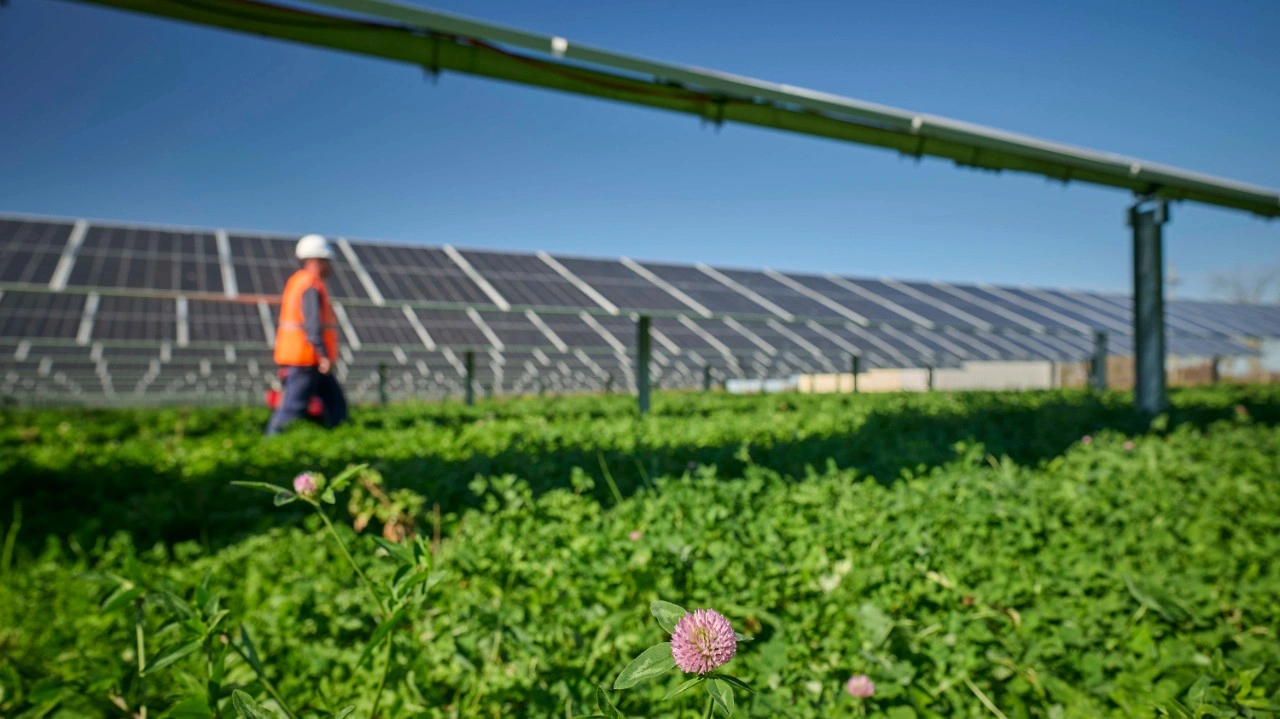
At Lake Iris, plans include native plantings to create pollinator habitat across the solar project grounds. The vegetation is expected to support local biodiversity and reduce long-term maintenance needs,while offering researchers an opportunity to study pollinator habitat.
Alongside the environmental plans, the development includes state funding through Michigan’s Renewables Ready Communities Awards. The state describes its program as flexible funding for local improvements and services, giving host communities a way to connect renewable-energy development with local priorities.
GM says its U.S. renewable-energy projects have generated nearly $2 billion in economic impact and support about 1,500 construction jobs annually in communities where it operates. However, those figures reflect the company’s wider portfolio, rather than the two Michigan projects alone.