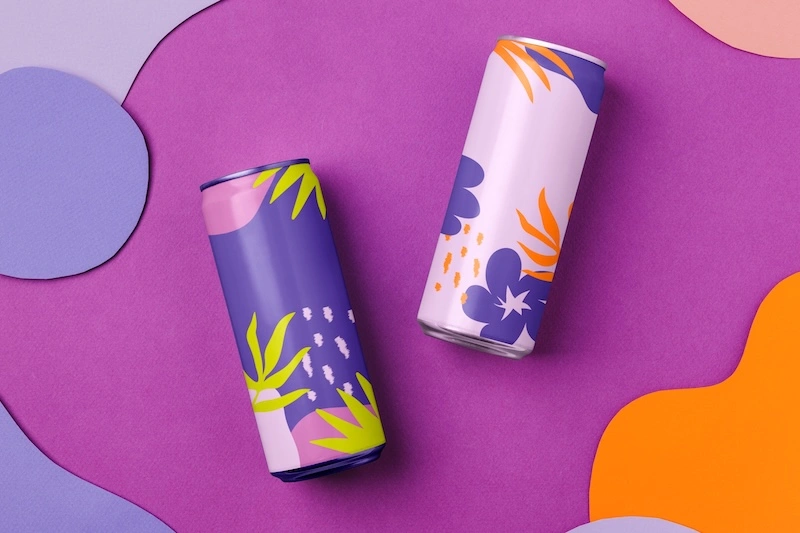

Wisconsin is best known for beer, cheese, and dairy, but in the last decade, it’s quietly become one of the Midwest’s most exciting labs for beverage startup innovation. From zero-sugar canned cocktails to THC seltzers, kombucha, functional mocktails, premium spring waters, and non-alcoholic beer programs, the state now hosts a remarkably broad ecosystem of drink startups.
A Surprising Breadth Across Categories
What stands out most is how many corners of the industry Wisconsin manages to touch. In many regions you’ll find a small cluster of kombucha makers or a single breakout seltzer. In Wisconsin, the list sprawls.
Carbliss built a booming canned-cocktail franchise around 0g sugar, 0g carbs, and 100 calories, scaling rapidly through production partnerships such as Pilot Project Brewing in Milwaukee and earning a spot on the 2024 Inc. 5000. PRESS, founded by Milwaukee entrepreneur Amy Walberg, has grown into a nationally distributed premium alcohol seltzer brand while maintaining Midwest roots.
In Menomonee Falls, Lotza reimagines punch as a sparkling functional mocktail/mixer with adaptogens and electrolytes, while VYV Hydration in Madison is pushing prebiotic electrolyte seltzers. NessAlla Kombucha helped pioneer organic kombucha in Madison, and Soul Brew Kombucha adds a Milwaukee-based voice to the category. Even the water aisle carries a Wisconsin imprint: Northern Chill bottles naturally alkaline spring water sourced in Langlade County.
Then there’s the explosion of hemp-derived beverages: Third Space Brewing’s Head Space line offers THC sparkling waters from Milwaukee; Untitled Art in Waunakee produces Mystic Orbit THC sodas, Goodwell CBD seltzers, and FLVR! non-alcoholic beers; Canndigenous in Cambridge produces its Tempo THC seltzer line; Kind Oasis creates THC seltzers and syrups from Milwaukee’s East Side; and Drinkin’ Buds in Sheboygan produces THC canned cocktails including Wisconsin Old Fashioned formats.
Why Wisconsin Fosters This Density
Brewing heritage. The state’s fermentation culture and consumer comfort with trying new formats creates a strong foundation. Contract packaging capacity is another major asset: Pilot Project in Milwaukee and Octopi Brewing in Waunakee, which was acquired by Asahi in 2024, allow founders to scale quickly without building expensive infrastructure.
Inputs and terroir. From cranberries and ginseng to hemp and clean spring water, Wisconsin’s agricultural base and natural resources lend themselves well to functional and premium beverage concepts.
Regulatory timing. The 2018 Farm Bill legalized hemp-derived delta-9 THC content up to 0.3% by dry weight, and Wisconsin’s alignment with that federal standard has supported rapid experimentation in THC/CBD drinks, while lawmakers continue to debate future restrictions.
Co-packing & manufacturing access. Startups often stall over “where to make it.” Wisconsin’s breweries and fermenters are increasingly opening their doors (or contract lines) to non-traditional beverages. Many brewing houses host co-packing operations for everything from NA beer to CBD soda to functional seltzers. That lowers the barrier to prototype, small batch, or regional rollout.
Consumer openness. A population steeped in craft beer culture is unusually receptive to experimentation. Wisconsinites are quick to sample NA beer, botanical sodas, or “better-for-you” alcohol alternatives, giving startups a ready-made testing ground.
Cost advantage. Relative to coastal hubs, Wisconsin offers lower overhead and less competition for distribution and talent. Founders can stretch dollars further while iterating.
As the founder of Lotza, Laura Markewicz told this site back in September:
"(Wisconsin is) the alcohol capital of the world. … If a beverage that is designed for professional drinking was created, it would be here,” and “If I were to have launched a beverage in LA, I would be one in a million. … Whereas launching Lotza in Wisconsin, it’s easy to get attention”.
How Wisconsin Stacks Up Formally
To compare states, we used a Category Breadth Index (CBI): the number of beverage categories (out of six) where a state has at least two active in-state brands. The categories include RTD alcohol, kombucha, functional or NA hydration, packaged water, hemp-derived THC/CBD beverages, and dedicated non-alcoholic beer lines. Requiring two or more startups per category ensures we're measuring depth, not one-off anomalies.
On this measure, Wisconsin scores 6/6. It has multiple brands in every category. No peer state comes close: Minnesota and Michigan each score 3/6, Iowa 2/6, and Indiana 1–2/6 (emerging).
The chart below makes the comparison clear:
By this conservative yardstick, Wisconsin leads the Midwest in category breadth. It’s not just producing a few breakout brands; it’s generating parallel waves of experimentation across nearly every emerging beverage niche.
Why This Matters for Midwest Founders & Investors
Founders: If you’re a beverage or foodtech founder in the Midwest, Wisconsin provides a compelling test bed: co-packing access, relatively lower costs, an experimental consumer base, and proximity to key inputs. You may want to incorporate or locate in Wisconsin strategically.
Investors / VCs / Angels: The sheer volume and boldness of beverage experimentation in Wisconsin mean there are more early-stage opportunities in “beverage adjacent” than many other Midwestern states. The diversity of categories also allows for portfolio hedging (not all bets on hard seltzer).
Ecosystem Builders / Accelerators: Beverage startups have unique needs (lab permits, food regulatory, co-packing relationships, shelf-stability R&D). That suggests there is opportunity to build Wisconsin-centric beverage support (lab incubation, packaging grants, connector networks).
State & Economic Development: Wisconsin’s ability to punch above in beverage gives it a point of distinction in Midwestern innovation branding. States like Minnesota or Michigan may well want to replicate this model, but they’ll need infrastructure, regulatory flexibility, and input networks.
Challenges (And Why Wisconsin is Still Winning)
Beverages are notoriously difficult businesses, with thin margins, tough competition for shelf space, and high costs for national expansion. Regulatory uncertainty around hemp-derived THC persists, especially as lawmakers reevaluate limits. And yet Wisconsin’s beverage founders continue to scale because the ecosystem has built a rare combination of manufacturing capacity, consumer willingness, and multi-category resilience.
What’s Next
Expect the next phase of growth to involve more specialized infrastructure: shelf-stability labs, rapid packaging pilots, route-to-market partnerships, and cross-state THC formulation strategies tailored to shifting compliance rules. As consolidation ramps up, Wisconsin’s most successful brands, particularly in non-alcoholic, functional, THC/CBD, and ‘better-for-you’ RTD categories, are likely to become acquisition targets or strategic partners for national beverage portfolios.
For now, Wisconsin sits in an enviable position: a state with a modest population but an unusually high concentration of beverage startups across nearly every emerging category in the industry. From kombucha brewers in Madison to THC cocktail makers in Sheboygan, from canned-cocktail pioneers in West Bend to functional water innovators in Langlade County, Wisconsin has become a proving ground for the drinks of the future.
That’s good news for founders, investors, and anyone who believes innovation doesn’t have to be coastal. The next time you open a can of something sparkling, functional, botanical, or a little bit edgy, don’t be surprised if it was born in Wisconsin.
Angela Damiani is a serial entrepreneur and community builder based in Milwaukee, Wi. Since 2009, she has co-founded and led multiple ventures, including NEWaukee, and is an active curator of the Midwest Founders Community. She writes about the realities and possibilities of building companies in Wisconsin and the broader Midwest.