

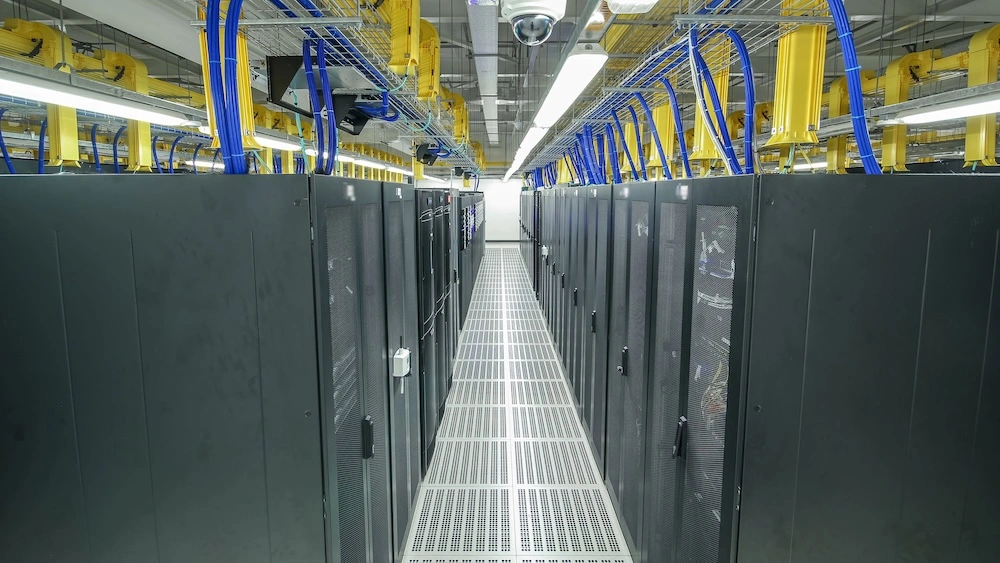
Voters in Sunbury, Ohio, approved a city charter amendment on November 3 that bans data centers drawing more than 25 megawatts, a measure aimed at the $2 billion campus Amazon Web Services has proposed for the city's Business and Technology Park. The amendment passed with 78.6% of the vote in the Delaware County Board of Elections' unofficial canvass.
Sunbury City Council had unanimously approved a moratorium in April on the establishment of data centers in the city that runs through January 31, 2027.The city approved an incentive for the campus in November 2024, when Amazon committed to 50 direct jobs, according to a city press release.
Sunbury was one of 18 Ohio communities that voted on 21 different data center questions during these midterm elections, more than in any other state. At least 14 passed bans or other restrictions including outright bans in Trenton, Pataskala, Granville, Piqua, Defiance, Urbana, Upper Sandusky, Conneaut and Hubbard. These decisions build on a earlier count that found more than 125 Ohio municipalities with data center moratoriums in place.
Conserve Ohio, the volunteer group that drafted the charter amendments on the ballot in 10 of those communities, including Sunbury, now wants the debate moved to the Statehouse. In a November 4 release, the group called on the Ohio General Assembly to enact a 12-month statewide moratorium on data center development and to pass legislation giving communities a direct vote on proposed facilities. Its own constitutional amendment, which would bar data centers using more than 25 megawatts, missed this year's July filing deadline. According to the group, it has since gathered more than 150,000 signatures across all 88 Ohio counties and is aiming for the 2027 ballot.
State officials have so far stopped short of pausing construction. In May, Gov. Mike DeWine directed the Ohio Tax Credit Authority to stop taking new data center tax exemption requests, part of a wider rethink of the incentives Midwest states once used to court data centers.
Ohio's results fit a national pattern. By the Friday after the election, 44 measures restricting data centers had passed across the country, with two more leading, according to the tracker Data Centers on the Ballot. That came even as the Federal Administration urged state and local leaders to welcome data centers for the jobs and tax revenue they bring, the Associated Press reported. In a NORC survey released the day after the vote, we found that 59% of Midwest likely voters opposed a data center in their area.
Where projects do move forward, developers face a second problem in finding the electricity to run them. Global orders for gas turbines reached about 110 gigawatts at the end of 2025, against annual manufacturing capacity of 60 to 70 gigawatts, according to research firm Wood Mackenzie, and manufacturers are now booking delivery slots for new units toward 2030. Reuters reported on November 9 that developers are bridging the gap with used turbines, converted jet engines and large gas engines.
One of the clearest examples of this effort also runs through Ohio. ProEnergy, based in Sedalia, Missouri, agreed in April to supply AI infrastructure company Crusoe with 13 PE6000 aeroderivative generator sets rated at 50 megawatts each, or 650 megawatts in total, for Crusoe's U.S. data center projects. The units are built on jet engine cores from GE Aerospace, which is headquartered in Evendale, outside Cincinnati.
Aeroderivative turbines are smaller and less fuel-efficient than the heavy-duty frame turbines utilities use for baseload power, however they have the advantage of being built and moved more quickly. A Mississippi air permit for xAI's power site covers 41 gas turbines, including eight 50-megawatt aeroderivative units, and some developers have installed more than 100 smaller turbines of mixed makes at a single site, according to Reuters.
Reciprocating gas engines - which converts the pressure of burning gas into rotating mechanical motion - are part of the mix too. Finnish engine maker Wärtsilä has booked about 3 gigawatts of gas engine orders from U.S. data centers since the spring 2025, according to the Reuters report, while Anthropic agreed to pay about $3.4 billion for 1.7 gigawatts of Caterpillar gas generators originally ordered by San Antonio-based power supplier OnePWR Solutions, the Financial Times reported..
For Sunbury, residents await certification of the vote with the end of the city's current moratorium coming in January, while Conserve Ohio's call for a statewide pause now goes to lawmakers ahead of its planned push to put the question to every Ohio voter in 2027.