.png)
The Midwest has a reputation for being pragmatic. We’re the "meat-and-potatoes" region. We value utility, hard work, and things that work. Industries we’re famous for? Manufacturing, agriculture, and healthcare, to name a few. Like I said…pragmatic.
In the world of B2B SaaS, this pragmatism is often a superpower, but it carries a hidden trap: the "Frankenstein" product and generic branding.
Too many Midwest founders fall into the habit of building functional yet uninspired software, treating the user interface — and the company brand — as an afterthought. The logic is usually, "If it solves the problem, they’ll buy it." While I do appreciate this sentiment (Midwest proud!), the “best” products don’t always win. Especially not without things like distribution and thoughtful design.
Oftentimes underutilized or overlooked, good design (both product and brand) is the foundation of trust. For Midwest startups, a world-class product experience and brand isn't just a vanity project — it’s a competitive lever founders should use to stand out from incumbents and erase geographical bias.
Bridging the Trust Gap from Day One
There is an unspoken bias in tech: the assumption that "Heartland" software is slower, safer, cheaper, or less innovative than what’s coming out of the Coasts.
A world-class brand identity erases that map. When a product looks like it was designed for the future, customers don't care if your HQ is in San Francisco or Indianapolis.
At High Alpha, we’ve learned that companies that embrace thoughtful design in both product and brand early on are more likely to "punch above their weight" from day one.
This is especially true when it comes to enterprise deals.
Fortune 500 buyers are tired of clunky legacy tools. When a startup presents a beautiful, intuitive UI, matched with a brand that feels cohesive and articulates a specific feeling and tone, it immediately signals a higher level of sophistication and trust — even if your company may only be a small handful of individuals and an office dog.
This is the power of good design.
At best, good design — especially at the earliest stages and in regions that face negative stereotypes like the Midwest — establishes authority and gives you the right to compete. At worst, bad design confuses people and evaporates any level of trust you’ve built in the relationship thus far.
As big believers in the power of design, High Alpha provides brand and product design services to portfolio companies. Here are a couple of examples from our talented team for companies in our portfolio — both of whom are headquartered in Indianapolis and are selling to enterprise customers, where building trust early is paramount.
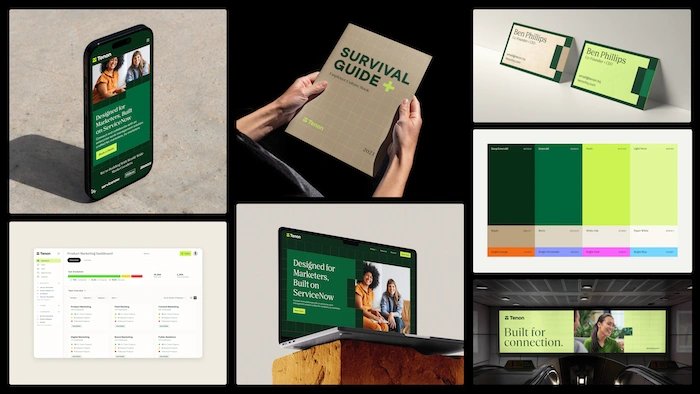
Tenon is an enterprise marketing automation solution built on ServiceNow. They’re a small but mighty team, and have used design to stand out from competitors and quickly establish trust in the company and product. They sell to marketers at large enterprise organizations.
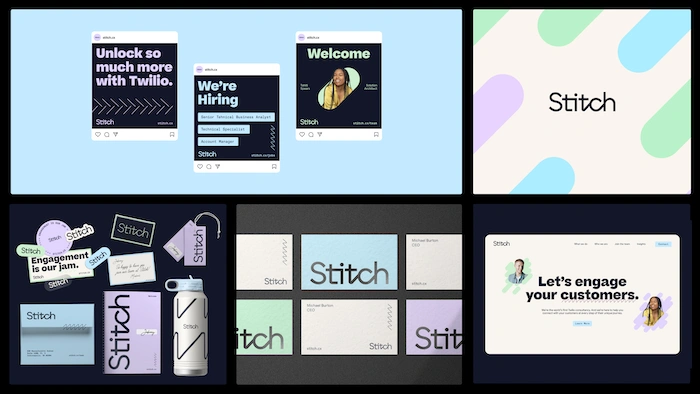
Stitch is a marketing services company that specializes in Braze. While not a pure SaaS play, Stitch operates in the high-stakes world of marketing technology consultancy. By leaning into a bold, fresh brand identity, they differentiated themselves instantly from the "Big Four" and stale legacy firms. They’ve embraced brand (and culture) from the very beginning, and today have hundreds of employees headquartered in Indianapolis, Indiana, with offices across the globe.
Attracting Talent via Design
We are in a war for talent. Top-tier engineers and marketers — especially Gen Z — want to build things they’re proud of. A design-forward culture acts as a recruiting beacon, signaling that your company values craft as much as code.
Design is the ultimate signal for quality. When a candidate looks at your website or your product’s UI, they aren't just looking at colors; they’re looking for evidence of excellence. If a team is willing to obsess over a clever brand campaign or the micro-interactions in a dashboard, a developer knows that the same level of care likely extends to the codebase.
In the Midwest, we often try to attract talent with stability or work-life balance. Those are great, but ambitious talent wants to build the Apple of their category. By prioritizing design, you signal that you aren't just building a functional tool in Indiana — you’re building a world-class product that happens to be based here. It changes the conversation from "Why should I move to the Midwest?" to "I want to be part of the team building that beautiful product, no matter where they are."
Tips for Starting Design-First
You don’t need the resources of a venture studio like ours to be design-led, but you do need intentionality. Here is how Midwest founders can shift their DNA:
- Hire an Athletic Designer Early: Don’t wait until hire #50 to bring on a creative. Your first 10 hires should include a design lead who is "athletic" — someone capable of handling both the product UX and the brand’s visual identity.
- Perform a Design Audit: Check your current interface. Does it look like a utility (a tool people have to use) or a partner (a tool people want to use)? If your software looks like a spreadsheet from 2010, you are leaking trust every time a lead opens a demo.
- Make an Early Good Impression: Focus on the first 30 seconds of a user’s experience. If they aren't impressed by the look and feel immediately, they may never stick around to see how well the features work.
- Be Distinct, but Flexible: In the early days searching for product market fit, it can be hard to make firm brand decisions. Be brave and commit to an ICP and problem — but remain flexible enough to shift as the product inevitably shifts.
Match Substance With Style
The next decade of Midwest tech shouldn't just be about building software that simply works (that’s a low bar!). It should be about building software that people also love to use. And while I’d never advocate for “style over substance” (shout out to my favorite British baking show), Midwest startups shouldn’t overlook the power of the style — intuitive, beautiful design that allows us to compete for deals and build big companies.