
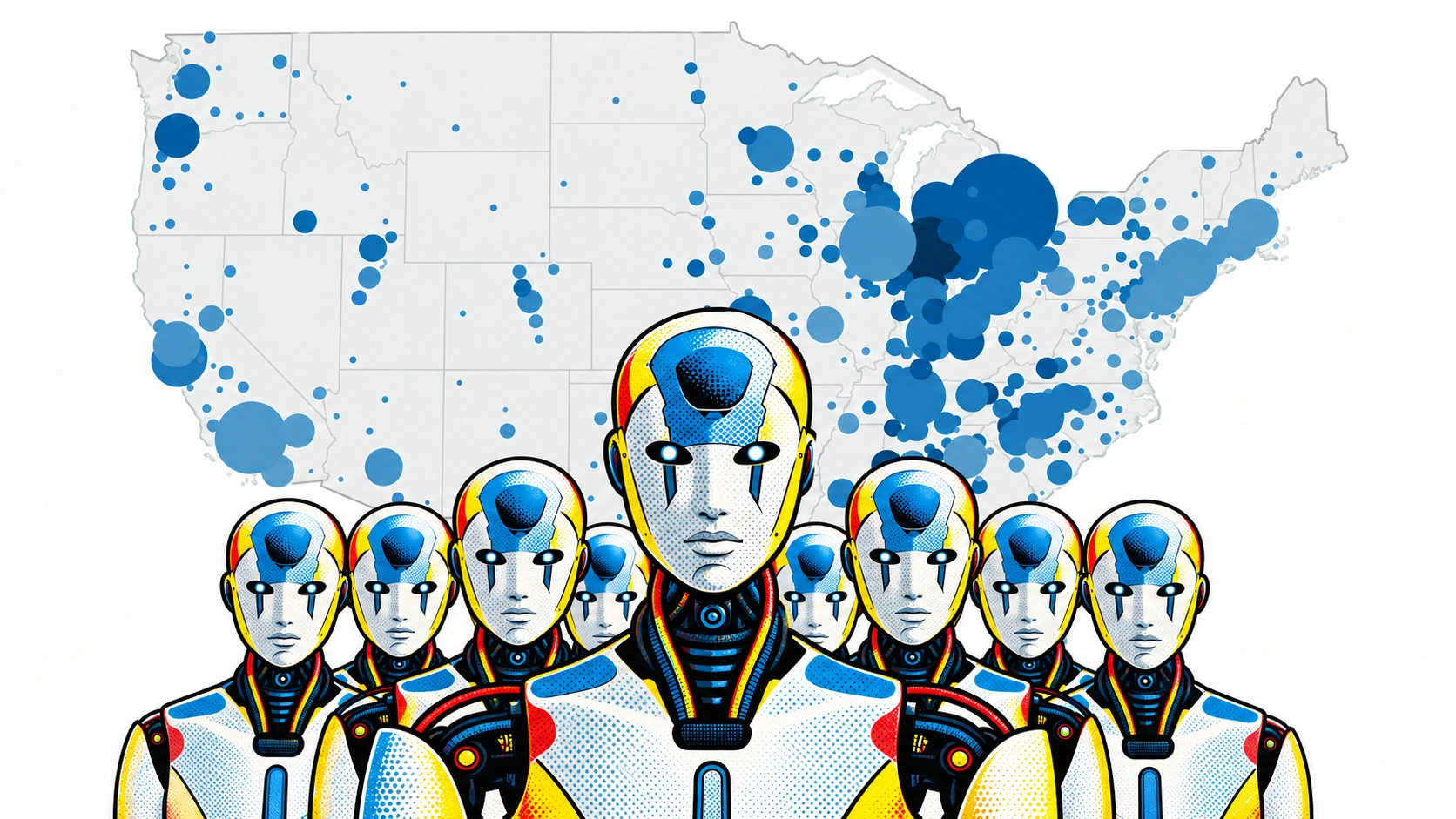
On an automotive assembly line in Normal, Illinois, a set of robots is learning to build cars by watching the people who already know how. The robots belong to Mind Robotics, which has raised $1 billion in funding and is headquartered in Palo Alto, California. It was spun out of electric truck maker Rivian in late 2025, and the assembly line where Mind is collecting the data its foundation models train on belongs to Rivian's plant.
Last week, the celebrated West Coast venture fund, Andreessen Horowitz, announced $1.1 billion for what it calls the Machine Age Fund, and named Mind Robotics one of six recent hardware bets that explain the thesis. The opportunity, the announcement said, is to rearchitect the whole AI stack "all the way down to the electricity."
The interesting question for us isn’t whether that thesis is correct. It plainly should be; a16z is a fund that isn’t often wrong and is frequently rated at the top of VC lists from TIME magazine and amongst academic analysts. The question, rather, is what our region does with this expensive description of our own backyard, with many of the companies it backs building locally, whilst banking their equity elsewhere.
It’s already being built here
When we broke down funding by industry over the past ten years, one data point stood out: the industry with the largest percentage of its nationwide funding going to companies in California was robotics, with 72% of all funding for that category going to that state. It seems both obvious and anomalous at the same time: the concentration of funding and talent in California makes some level of sense for development, but because of where those robots are being tested it does not.
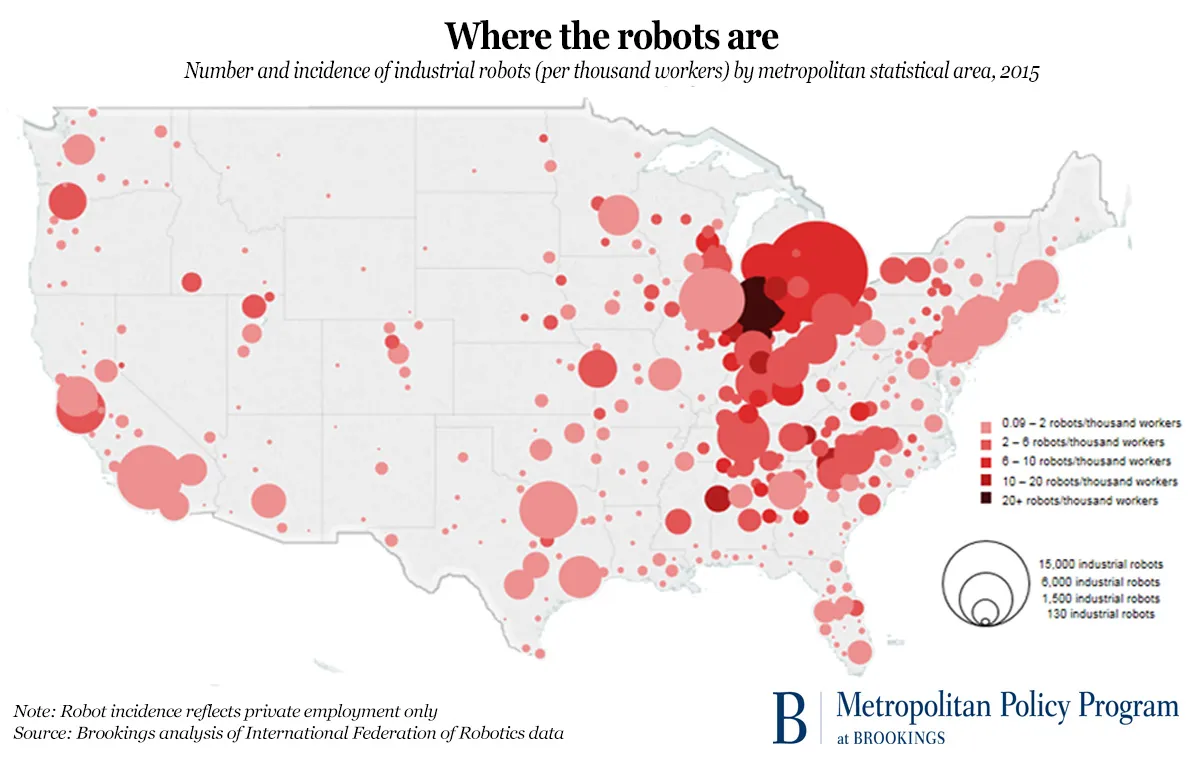
In 2017, CBS quoted an analysis from the Brookings Institution, a thinktank, that the auto industry was home to more than half of the nation’s industrial robots, with Michigan, Ohio and Indiana alone hosting 29% of them as their own graphic below demonstrates. Recent data indicates this concentration has held.
And yet the announcement makes no mention of our industries or region, while the companies mentioned are primarily based on the west coast: Unconventional AI in San Diego, Atoms in SF, Nexthop AI in Santa Clara, Heron Power in Scotts Valley, California, Mind Robotics in Palo Alto, while Volta — an AI data center platform, of all things — is based in Cali with a CEO in London and its first 133 megawatts going into a project in Norway.
Read the rest of the fund's shopping list - next to the archive of our site’s stories - and the association of industries vs the juxtaposition of dollars continues.
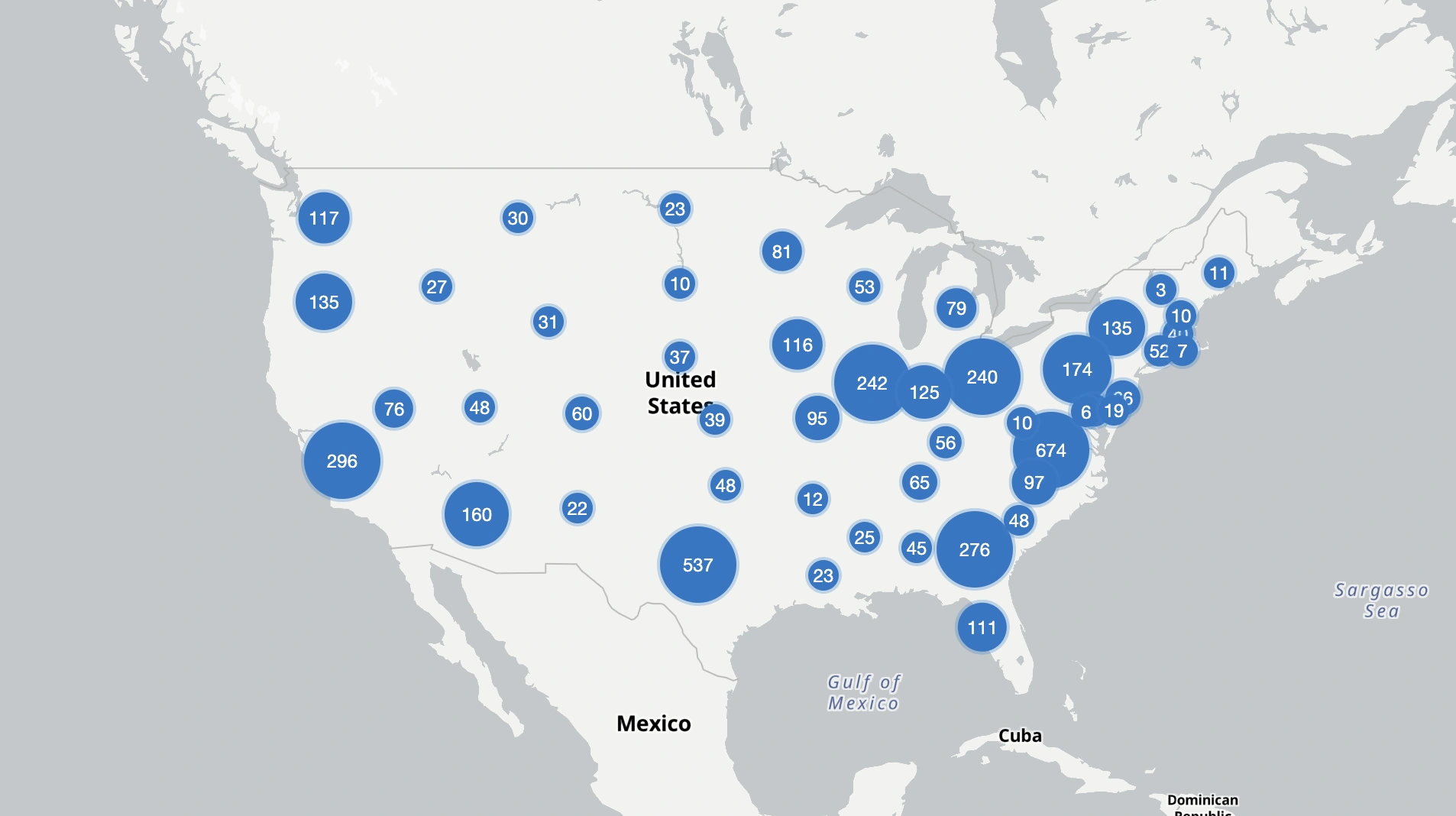
They want data centers, where the Midwest has quietly become the new data center heartland of America (see image below): OpenAI's Stargate project in Michigan landed as the largest investment in state history, Wisconsin hosts what has been billed as the world's most powerful AI data center alongside Microsoft's first facility in the state, and in Ohio an old industrial park at Conesville has been converted into an AI hub.
They want cooling and power electronics, and a University of Wisconsin-Madison spinout is rethinking data center cooling while Chicago's ElectronX has raised $30 million to build a power derivatives market. They want robotics and industrial automation, and Rockwell is putting a factory in Wisconsin as part of a $2 billion U.S. expansion while Hitachi's JR Automation moves its global headquarters to Michigan. They want the exotic end of compute, and Ann Arbor's Sygaldry has $139 million to build quantum computers for AI data centers. Even the fund's least glamorous requirement, the "cooling, materials, electrical, and real estate build out," reads like a description of what has been quietly exploding in Midwest deep tech for two years.
We’re not suggesting there is anything sinister in this; the firm invests where it thinks best, as its remit, and that is what every venture firm should do. But the juxtaposition of funding vs execution in this particular area illustrates the problem: we’re a tenant in this equation, not the owner.
Imagine a world where the fund that has dominated the zeitgeist like no other, that modelled its operations on Hollywood talent firm Creative Artists Associates (CAA), and which says in its announcement that the “GTM, talent, and marketing machine that we’ve built at a16z is now ready to serve hardware founders” pointed that attention at the actual place where the atoms the companies it backs are being built.
Hosting the buildout is not the same as owning it
Almost everything the Midwest currently contributes to innovation is location. We have real assets that the hyperscalers need. But a site either pays or earns rent rather than builds equity: the company that owns the accelerator, the interconnect, the memory architecture or the power-conversion patent captures the return, while the county that hosts the campus gets to add a property tax line into a spreadsheet and share it at a local meeting, alongside some construction, maintenance and plant management jobs.
That sucks, plainly.
If the ambition is to own a piece of the pie rather than just rent our own ideas back, the constraint in this example isn’t location or even sentiment. We believe markets usually solve problems more efficiently than most anything else. So the problem is firstly the number of Midwestern companies building and being funded at the layer a16z says it wants, and the amount of capital available to them before they’re big enough to get noticed.
There are green shoots, of course.
Ohio's Heartland Ventures raised a $60 million third fund explicitly for Midwest reindustrialization, Detroit's Nox Metals took an $11.5 million seed for metal manufacturing with Y Combinator involved, and Phase3D raised $2.9 million in Chicago for additive manufacturing inspection.
a16z ended its announcement by inviting hardware founders to get in touch. So if you’re reading this in the Midwest and fit the descriptions they’ve outlined, just do it. They’ve identified the problems they will pay for, and most of those problems can be spotted while staring out the passenger window on an interstate somewhere between Cleveland and Eau Claire. Whether our region ends up owning a piece of the answer or simply hosting it is not something Sand Hill Road should decide for us, and the end result is up to you.
That’s why somebody, somewhere, with more influence and a better rolodex than us should be on the phone and pestering our friends on the west coast with these questions, rather than reading about more years of rent over equity in 2027 and beyond.