Minnesota knows how to build big companies. The North Star state can point to names like Medtronic, Best Buy, Target and 3M and make a credible case that building successful businesses is already part of its DNA, and so are the entrepreneurs that brought them to life. What it has not done nearly as well - yet- is turn that industrial and corporate muscle into a stronger, more visible startup culture, despite stellar numbers in comparison to its neighbors.
That is the gap Origin House says it wants to attack.
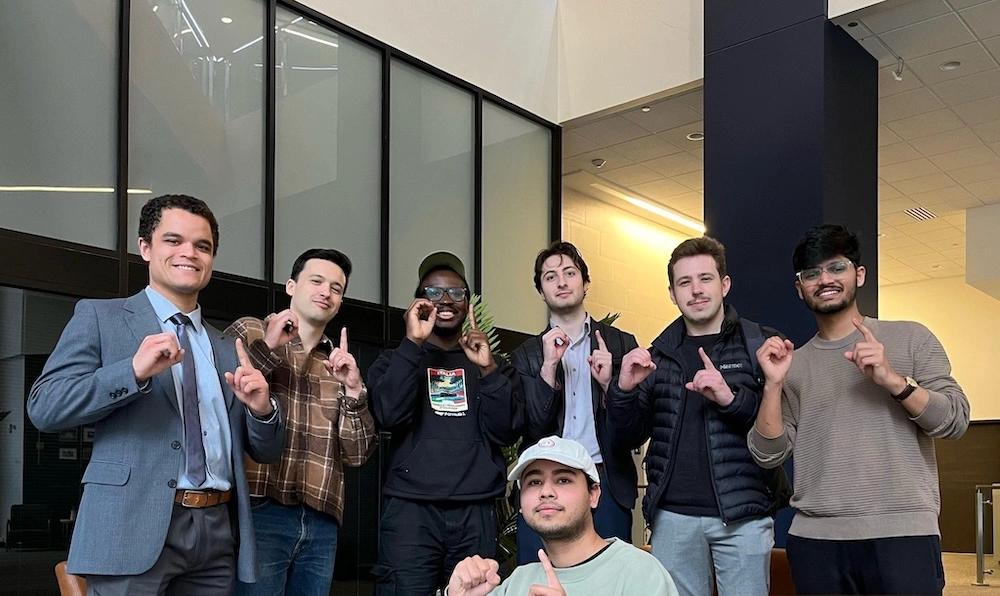
The new initiative, co-founded by University of Minnesota student Srinivas Preetham Addepalli and Carlton College grad Molubah Seley, is opening a low-cost physical space with a simple pitch: make it easier for people to start a business in downtown Minneapolis, keep building, and stay in the game long enough to try again if an early idea fails.
Addepalli’s argument is straightforward. Minnesota should not be known only for producing large companies. It should also be better known for startups.
“Minnesota is known for Fortune 500 companies for a reason,” he said. “It has always been a state where building has always been a thing. So, we wanted to tell a story of how these big corporations were formed in Minnesota” with the idea behind Origin House, he said, is to “ignite the fire into building more stuff, building more startups.”
That pitch is not just about civic pride. It is also a kind of critique of what already exists.
Addepalli said Origin House grew in part out of some frustration with local startup programming. The alternative, he told us when we spoke, was intended be something more direct and founder-led. “It should be for founders by founders,” he said. The idea being that the cofounders know what they need to get started and keep going, so they must have a good idea of what others may need as well.
That point matters because Origin House is not presenting itself as another accelerator or nonprofit program. It is starting with something more basic: a room, a membership model, and a founder community built around repeated contact.
EDITORS CHOICE:
Read more about Midwest Startup Funding
Read about what gets funded, where in the Midwest
Read the latest Midwest University Rankings
Addepalli described it as “the gym for founders,” a place where people can come in, collaborate and “ship products.” Their theory is that founders working in isolation are more likely to stall, cling to weak ideas, or quit altogether. Put them around other people building things, and the pressure changes. So does the pace.
“When in a room full of founders, in a room full of people who are doing the same thing, building stuff, shipping products, I tend to do the same thing,” he said. “Isolation should be replaced with this [Origin House].”
That may be the most interesting part of his pitch. Origin House is trying to solve for momentum first.
Addepalli framed that around a familiar founder problem: the sunk cost fallacy. Too many people, he said, keep forcing an idea that is not working because they have already invested too much time and energy into it. Then when it fails, they leave entrepreneurship entirely instead of applying what they learned to a better, second attempt.
“I’ve seen many people quitting altogether,” he said. “It’s like: well I’ve put in so much effort into this I need to make this work.” What needs to change, he argued, is the willingness to treat a failed product not as the end of the road but as experience for the next one.
The physical space is supposed to support that mindset shift, but their stated ambition also goes beyond a single room in Minneapolis.
He told us that their long-term plan is to use Origin House as the start of a broader network connecting startup communities across the Midwest and beyond. “The long-term goal is to make this into a funnel,” he said, “not an incubator.” In his telling, that would mean bringing together startups, talent and investors from different regional communities and creating more opportunities for “cross regional investing.”
While that lofty ambition may be some way off, for now Origin House kicks off with an event.
The group is planning a builder-focused gathering called O1 Summit at the Expansive TriTech Center in downtown Minneapolis on April 18-19. The event is free to attend - with a vetted application required in order to be admitted - and aims to draw around 150 people. Applications close on Monday April 6th, so anyone interested should probably hurry up and apply here. Participants will compete for $10,000 in cash prizes for winning demos, alongside other credits and perks from partners including Lovable, Stripe and Cursor.
“We see this [the O1 Summit] as a meaningful opportunity to show up, connect, and contribute to the next wave of innovation happening locally,” Adrienne Pooley of Augeo Marketing - of one of the event sponsors - told us. “Building relationships with founders and innovators shaping what’s next,” was one of their goals, she added. “If we can spark a few ‘what if’ moments that turn into action, that’s a win.”
Local investment fund Hill Capital is also supporting the initiative, with Associate Kiley Hill telling us that the firm loves “supporting events throughout the entrepreneur life-cycle,” adding that Hill Capital are “advocates that a strong community is just as valuable as capital injections.”
All of which makes Origin House an interesting - and early - attempt by a group of local founders to build the kind of environment that they personally think Minnesota is sorely missing. Do founder-led communities keep their edge as they grow? Can something like this produce better companies, more people willing to try again after the first one fails, or even just a greater density of community and peer-led support?
Only time will tell.
But the underlying point is one that we share often: a region that can produce major companies, has deep talent pools and ambitious young builders should probably be producing more founder infrastructure that feels practical, local and built by people who actually need it.
Origin House is betting that one way to change startup outcomes in Minnesota is to start by changing the room where they’re built.