
Become a member & keep reading for free, or choose a paid membership.
Access all our content & email newsletter
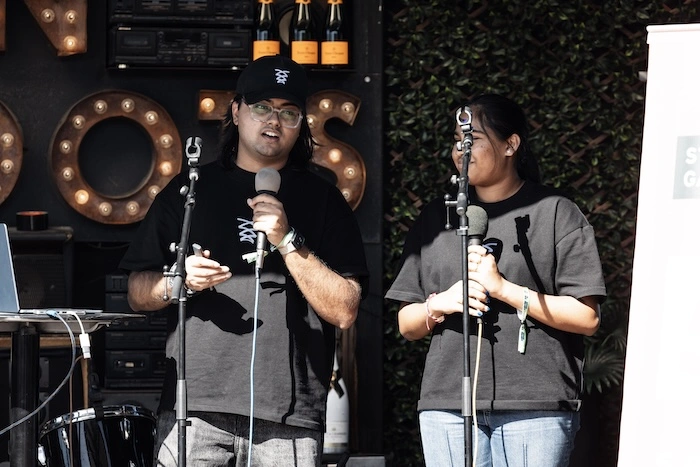
Last week I attended SXSW and Midwest House for the first time, primarily as an ecosystem builder. Prior to working in the Michigan startup ecosystem (read Aria's MFF Re-cap here - Ed), I had never met anyone who attended SXSW, and genuinely thought it was just for influencers and music festival fashion icons.
I’ve learned a lot since then.
Hearing about it for a year and then seeing it up close brought things into stark perspective: the opportunities, the limits, the FOMO, the vibes. Ultimately, though, what I was paying close attention to was not only what connections were made and what happened after the fact, but what made those connections possible in the first place. Here are some observations.
Someone Has to Build the Room
Most of my work in the ecosystem is behind the scenes.
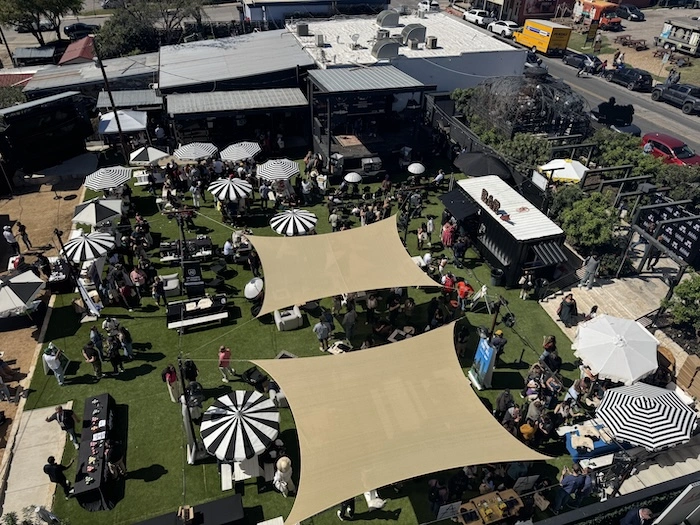
This has resulted in a keen eye for the details others might miss, or rather, the impact of those details. What does the check-in process convey about how you fit within the room? Does the space encourage you to move or does it anchor you in one place?
Read Midwest House Substack story on this year's SXSW
SXSW is full of activations, intentionally designed spaces built to convey a particular feeling or experience to particular groups of people. I saw everything from pop-up yoga classes, to free burgers, to vibrating hammocks.
It’s one thing to work a room, but another to know how a room works. I’ve spent the last year thinking through details just like this for retreats and other experiences to foster connection between founders. If you’ve been to a stock networking event recently, you know: bringing people into proximity with one another is often not enough. SXSW offers innovative, intentional ways to bust through common networking practices to experience what it means to foster real-time, authentic collaborations.
Surprisingly, the most valuable opportunities for me arose from an early-morning 5-mile-intentional-conversation walk with Austin locals and brunch at a jewelry store.
In some cases, growth might not be a matter of acquiring more resources, but in taking more calculated, creative risks with the resources we have. Building the room with intention and creativity can move the needle. SXSW creates the opportunities to experience a wide depth and breadth of what collaboration could look like back home.
What Mature Ecosystems Actually Look Like Up Close
In Austin, I walked about ten miles a day from venue to venue, with the goal of exploring the details and structures while on the go. Walking in itself creates opportunity for serendipity, and it forced me to slow down and be more aware of the surroundings — the murals, the people, the companies.
It was a reminder to me that the seeming serendipity that can occur in connecting with others at national events like this is actually structural. Serendipity happens because of the planning, organizing, building, investing, and reconstructing that happened long before.
Many people laid the groundwork to create that density. And we can learn from what it takes to make that possible.
Generosity Is Infrastructure
Beyond these elements, the invisible work of generosity also infused the experience with serendipitous connection. This was in full view at Midwest House and on WhatsApp. I saw, in real time, as founders chose not to gate keep relationships, but rather shared them generously with others. I saw some founders share invite-only party details, saying they would get others in the door. As a relative newcomer to the Michigan ecosystem, it was gratifying to have enough context about the landscape to elevate Michigan founders’ great work in other SXSW spaces.
A sense of generosity in itself multiplies serendipity by expanding the field of opportunity for others to connect. One party invitation issued to one founder became an opportunity for three other founders. Generosity multiplies.
Coming from a less mature ecosystem, it was a good reminder that the Midwest is a great place to build. But one state or one region is not the end-all be-all. Stages like SXSW create the opportunity to bring home resources, partnerships, and relationships that will benefit not one company, but many. Generosity creates a cooperative foundation on which to build.
Michigan Was in the Room. Now We Have to Stay
One founder mentioned that people at SXSW understood the problem they were trying to solve much more quickly. Others shared about the sheer number of positive introductions to new investors they made that would not have been possible back home. These demonstrate that Midwesterners belong in the room. We just have to keep showing up. I talked with an investor or two who hadn’t necessarily overlooked Michigan, but had simply never considered investing there. The more we show up, the more opportunity they’ll have to see what the Midwest is truly capable of building.
I left SXSW feeling energized and resolute. Midwest founders clearly have a place on the national stage. But the question is, who is doing the invisible work of putting the Midwest in rooms where the future is being decided, and what does it cost us when we don't?
Aria Spears leads cross-functional projects in Michigan’s startup ecosystem at Michigan Founders Fund. She’s worked in community-building organizations for ten years, is a Duke grad student studying community innovation, and previously lived in Fayetteville, NC.
Read more on this topic
All Rights Reserved
Copyright 2026 Zeroto7 LLC
Powered by: