
Become a member & keep reading for free, or choose a paid membership.
Access all our content & email newsletter
I really do have a cool job, and I say that knowing full well that I am about to spend the next several paragraphs writing about ecosystems for a publication run by someone who has a documented bone to pick with the word. Phil Vella runs this whole operation, which means he will absolutely be reading this. So Phil, I am sorry and I also cannot stop. My job title is Ecosystem Navigator, which means this is essentially a professional obligation at this point.
The reason I keep coming back to it is that the word does real work when used correctly. Not as a shorthand for a region or a label slapped on a strategic plan, but in the more literal and dynamic sense. When I think about what a healthy ecosystem actually looks like, I don't picture a map or an org chart. I picture a middle school science fair terrarium, full of living pieces that depend on each other, compete with each other, and sometimes have no idea the other creatures are even there. Part of my job is operating inside that terrarium, which in practical terms means getting out from behind my desk and into rooms where founders, funders, and support organizations are all sharing the same air.
The quality of an ecosystem can probably be best judged by the events it produces, and I believe that because I have seen the full range of them. For people who don't have attending events baked into their job description, showing up requires real sacrifice, stepping away from a business, a family, a packed schedule, to be in a room that may or may not be worth their time. We have all been to the ones that weren't, and it stings a little more when you know what it costs to get there. So when I find myself driving home from an event that actually delivered something, I pay attention to what made it different.
I was at one of those events recently, and what made it work is worth talking about.
The Event
The event was Raise Right: The Founder-Capital Ecosystem Summit. It was hosted by Launch Fishers, a wonderful entrepreneurial hub for the Indianapolis area that understands the value of putting resources and people in the same physical space and letting things happen. At its core, it was designed as a matchmaking event between funders and founders, which is a format with a pretty clear value proposition. Bring in the capital, bring in the companies, and let the room do the work. As neither a current founder nor funder, I came in as a supporter and observer, which is a role I am pretty comfortable with as part of my role.
It was good in the way these events usually are: Familiar faces, name tags that finally put a face to a four-month email thread, the particular energy of a room full of people who all care about the same general thing. My baseline expectation going in was to shake some hands, say some hellos, watch a few presentations, and then head out. I did not expect this one to feel any different than that.
But it did, and for a reason that had less to do with the matchmaking than with something that rarely happens when a group like this gets together.
A Day of Accountability
What set this event apart was not the format or the programming on its own, it was that nearly every meaningful piece of the Indianapolis entrepreneurial ecosystem was in the same room at the same time. Founders, funders, support organizations, economic development people, all of it together, and that is somewhat rare. What made it uncommon was that rather than letting that concentration of stakeholders dissolve into another round of polished updates and mutual congratulations, the day created space for something more honest than that.
My colleagues and I at the Indiana Small Business Development Center all take a lot of pride in being part of this ecosystem, presenting a very consistent team spirit when talking about it publicly. But the harder question is whether we are actually executing in a way that reflects that, and it is not a question that comes up very often in forums like this one; the social default is to celebrate what is being done rather than interrogate whether it is working. The mic tends to get passed around, everyone says something encouraging, and everyone leaves feeling good about themselves without anything particularly substantive having happened. This day was different.
The keynote speaker was a big part of why: Chris Heivly, co-founder of Mapquest which was acquired by AOL for $1.1 billion in 1999. Chris noticed me in the crowd - as perhaps the youngest person in the room - and asked if I knew what Mapquest was, I did not, the room had a good laugh, as did Chris, and told me to go home and ask my parents. Chris runs an organization called Build The Fort and has spent 17 years doing ecosystem work in his home base of Raleigh-Durham and in cities all over the world. Having someone external to the Indianapolis ecosystem was an advantage because Chris had no relationships to manage, no turf to defend, and no reason to soften anything.
Where are the Founders?
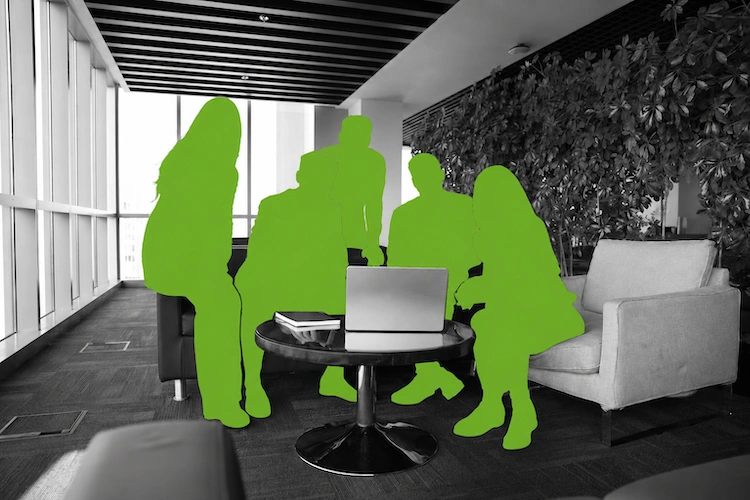
Chris walked the room through a series of pictures capturing what ecosystem leadership tends to look like from the outside, the kinds of images that end up in press releases and annual reports, and then asked the room what was missing from every single one of them. People caught on fairly quickly. There were no founders anywhere in those pictures.
The point he was making is that as a collection of entrepreneur support organizations and community stakeholders, it is easy to drift away from the reason any of it exists. Behind every pitch competition, every workshop, every angel group, every grant program, every coworking space and tax credit and coffee meetup… the only goal should be to serve founders. That is the whole point of the entire apparatus. But organizations start optimizing for their own sustainability, stakeholders accumulate other priorities, and the people the ecosystem was designed for slowly become something closer to customers, rather than the only reason it exists.
Chris asked every active founder in the room to please stand up, because we were at an event that had been specifically designed and promoted as a gathering for founders and the people who support them. When those founders stood, Chris looked at everyone still seated and told them their job was straightforward: help the people standing. It was a small and simple thing to do, but visually made it very clear what our group objective should be.
Chris went on to describe a pattern he has seen play out before. It usually starts with a well-connected, well-meaning group of community leaders deciding it is time to build something. They assemble their peers, develop a name for the initiative, create a strategic plan, and get to work building the infrastructure they believe a great ecosystem requires. Money gets raised, spaces get built, events get announced, and at each step the activity itself gets mistaken for momentum. Local media shows up and everyone celebrates the progress being made, and nobody in the group ever really stops to ask whether any of it is actually moving the needle for founders. Chris called it ‘leadership circa 1956’, a room full of stakeholders solving a founder problem without an actual founder in sight.
The question he encouraged us to attach to every program, every initiative, and every resource allocation was the same one: does this actually help founders, and better yet, have you asked one for their feedback?
He also made clear that this conversation runs in both directions, because founders carry a real responsibility that comes with the role. Regardless of stage or traction, there is always someone earlier in the journey who could use what a founder knows right now, and the ecosystems that develop strong culture are the ones where that kind of giving is expected rather than exceptional. Chris described what he called the aspirational stack, where the solo founder looks at the three-person team and sees their future, and that three-person team looks at the company that just closed a seed round and sees the same thing. That chain of inspiration only functions if the people further along are willing to turn back around. The secret ingredient to all of it, in his framing, is vulnerability. Founders feel pressure to project certainty and mentors feel pressure to have all the answers, but the best mentorship happens when someone is willing to say they are stuck, and that honesty creates the conditions for something productive to happen.
We Need More Conversations Like This
I left that event thinking less about any individual takeaway from Chris's presentation and more about the conditions that made the whole day possible.
How often does a startup ecosystem actually get its stakeholders in the same room to have an honest conversation about whether things are working or not?
There is always more to do and it is very easy to stay busy doing it. Activity can feel like alignment, especially when everyone around you is also busy, but being busy in different directions is still fragmentation. Without intentional moments where everyone pauses and takes stock together, it is very easy to drift while still feeling like progress is being made. The accountability that was present at Launch Fishers was not accidental. It happened because someone external came in with enough credibility and enough distance from local relationships to say the things that are hard to say, and because the right collection of people were there to hear it at the same time and then do something with it.
Every startup community should be building more moments like that into the calendar, not as a formality or a box to check, but as a recurring opportunity for the people who shape the ecosystem to look each other in the eye and ask whether they are actually doing what they said they were going to do. Bringing stakeholders together to celebrate is easy and has its place, but bringing them together to honestly assess the current state of things and walk out with commitments attached to names is a different kind of event entirely. It is the harder one to design and more valuable to attend.
Read more on this topic
All Rights Reserved
Copyright 2026 Zeroto7 LLC
Powered by: